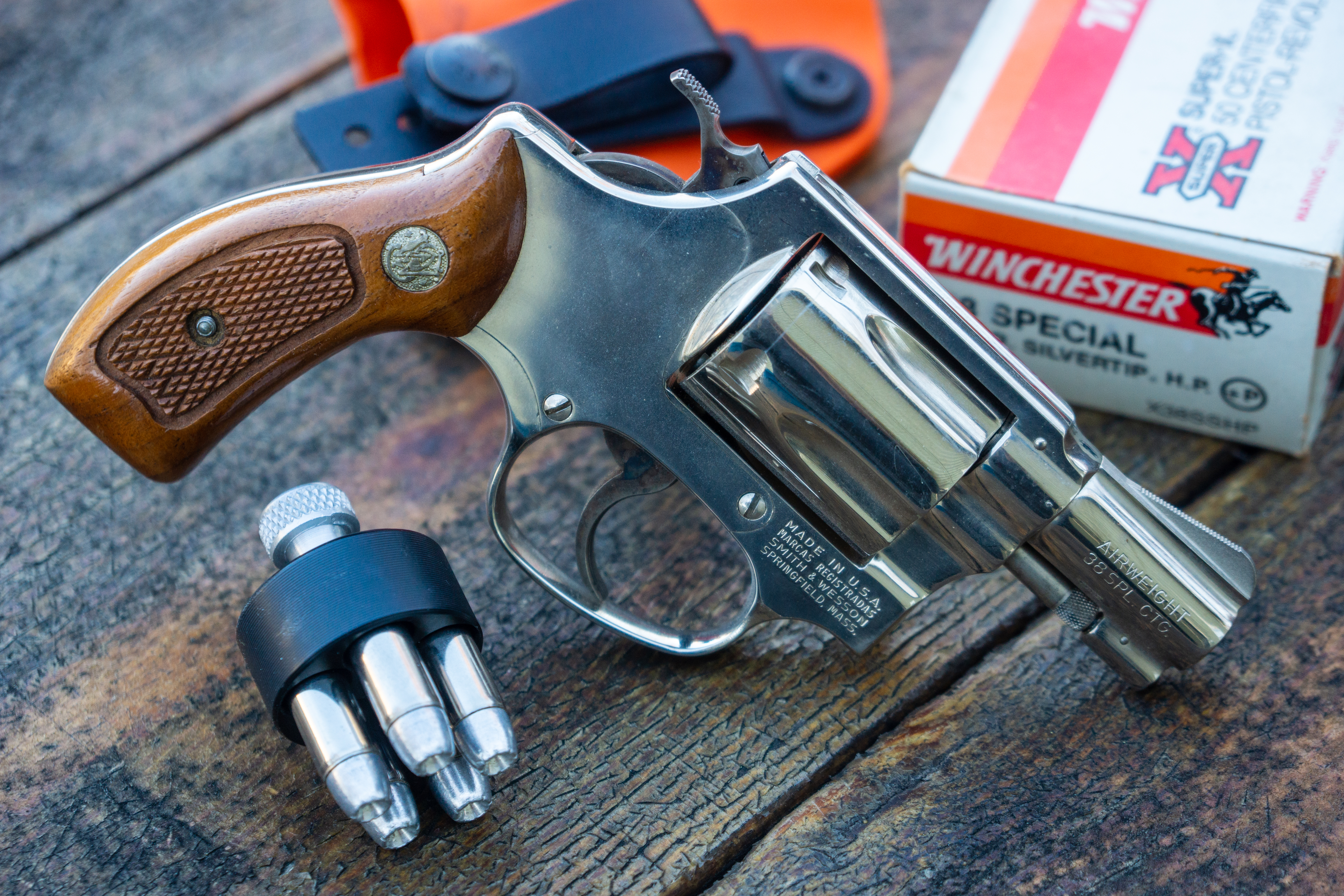
Showing posts with label ammunition. Show all posts

Wednesday, August 27, 2025

Popper


The only handgun cartridge that really lives down to its reputation is .25 ACP, also known as 6.35mm Browning.

Dating to the dawn of the last century and designed for little blowback vest pocket autos, even the warmest Euro loadings are decidedly tepid. While SAAMI maximum pressure for the cartridge is 25,000 PSI, which is similar to the .22LR's 24,000 PSI, it tends to use heavier bullets that travel at a lower velocity.

At Marion County Fish & Game, I chronographed some Fiocchi 50gr FMJ ammo out of my Titan .25, using the Garmin Xero C1 Pro. The ten shot string averaged 752 feet per second, which is a feeble 63 foot-pounds of muzzle energy, if that's a number that's important to you.

For comparison, .22LR Federal Punch flirts with supersonic velocities out of even a pocket pistol, averaging 1,108fps from the Ruger LCP II .22 the last time I chronoed a batch. (That's 79 foot pounds of energy, for what it's worth.)

.25ACP, even the Euro-spec ball, is known for minimal penetration, and if you're using a hollow point projectile that, by some miracle, expands despite the low velocity, you're going to lose what marginal penetration you do have. If, for some reason, all you have is a .25, load it with Fiocchi or S&B or similar FMJ and aim with care.

.

Tuesday, August 19, 2025

Velocity

As always, the RMR made ringing plates at 25 yards super easy.

The KelTec PR57 is the smallest of the current crop of pistols chambered in 5.7x28mm, part of which comes from the fact that it has a four inch barrel, as opposed to the 5" and longer tubes on the others.

With velocity being the cartridge's stock in trade, what effect does lopping an inch off the barrel have on the speed of the most common defensive loading, the 40gr SS197 loaded with the Hornady V-Max projectile?

At Marion County Fish & Game yesterday, with temps in the low eighties there on the banks of Eagle Creek, I busted out the Garmin Xero C1 Pro and compared the velocities from the PR57 to those from the Five-SeveN Mk.3.

From the larger pistol, the average velocity over ten shots was 1,715 feet per second, while from the compact KelTec, that number dropped to 1,611 fps. More noticeably, the extreme spread really opened up, with the fastest and slowest rounds from the 5" barrel being only 26.4 fps apart, while the 4" barrel opened the extreme spread to ninety-five feet per second. That extra inch for the powder to burn helped velocity and consistency.

Incidentally, that Garmin is handier than a pocket on a shirt. Just reading the numbers off the little box right there on the bench beats trudging downrange to my old Shooting Chrony Beta, notebook in hand, at the end of each string. Plus I can do my chronograph work indoors at Indy Arms Company in bad weather! Recommend.

Monday, June 09, 2025

Ammo Recall

Apparently there are three lots of Magtech 5.56mm ammunition that may have been loaded with "incorrect" powder charges and are being recalled.

You can see the affected lot numbers here.

The fingers you save may be your own!

Friday, November 29, 2024

Lots of people can't even spell 'tariff'...

I've been scrolling around and adding twenty-plus percent to Sellier & Bellot, Magtech, Fiocchi, Wolf, PMC, some varieties of Winchester...

(This is to say nothing of CZ, Taurus, most HKs and Glocks, all the various Turkish companies, lotsa Berettas...)

.

Friday, June 28, 2024

BOOM

I've got a box of .327 Federal Magnum 85gr Hydra-Shok that I ordered from Lucky Gunner a while back that I keep meaning to chrono and do some terminal ballistic testing on.

The Hydra-Shok is generally a dated design and not a projectile I'd normally recommend as a first choice, but the claimed muzzle velocity for these things is 1400fps and I have a working theory that even Hydra-Shoks'll do okay if you put enough ass behind them, and the 45,000psi .327 Fed cartridge has plenty of ass.

.

Thursday, April 11, 2024

Gratuitous Gun Pr0n #253...


Hotel room nightstand shot from TacCon: Taurus 856 T.O.R.O. with a Holosun 507k in a PHLster City Special, six rounds of Hornady Critical Defense 110gr +P in an eight round Tuff Strip, my trusty POM spicy treats dispenser, 500 lumen Surefire EDCL1-T, and a waved Spyderco Dragonfly.

Click the links to steal this look!

(Do I think the Hornady 110gr +P Critical Defense is the bestest load for the .38? Probably not, but it's easy to get the dot sighted in with, and reloads are speedy with those pointy bullets. Its performance is certainly adequate, especially if you're not particularly worried about needing to defeat vehicular barriers.)

.

Monday, March 04, 2024

This is not an advertisement.

When I write a firearms review, I tend to follow a pretty standard template.

In the first part of the article I give a little bit of historical context to the blaster I'm reviewing. I try and give some context for why it exists and what market niche it was intended to fill.

In the second part of the article I give a physical description of the thing itself. I'll describe the sights, control layout, its weight and dimensions, probably a description of how to field strip the thing, if applicable.

I'll wrap it up by giving a report on how the thing functioned (or didn't) in actual use. At most, here, I might mention that I'd carry the gun myself, or that I think the thing has good sales prospects. There will then be a data box of some sort with specifications and the manufacturer's suggested retail price.

Inevitably, I will receive inquiries asking whether I thought it was "good" or "bad" and should my inquirer spend their own hard-earned dough on one?

Friend, I have given you all the applicable information you need to make that decision. It's up to you to compare that data to your needs and wants and determine whether you want to buy one or not. 

I've practically chewed your food for you, Gentle Reader; I'm not going to rub your throat to help you swallow.

Similarly, when I write about a cartridge, it's not because I "love" the cartridge or "hate" the cartridge. I was once the sort of dork who had a "favorite caliber" (it was 10mm, in case you're new here) but I also once laboriously made tedious little top ten lists of my favorite songs, too. I was a kid. Kids do dumb and tedious stuff and get really serious about it; hopefully most people grow out of that phase.

So when I write up some five or six paragraph explainer about what Federal was thinking when they came up with .327 Fed or .30 Super Carry, for example, it's not because I want you to like the round. Or that I want you to hate the round. I'm just explaining why the round exists in the first place. I don't care one way or another whether you like it or not.

And yet every time I do, I get someone doing this...


Friday, February 09, 2024

Less-Than-Special Sauce


The .44 Special cartridge debuted with the large frame Hand Ejector revolvers at the start of the previous century.

It was a hot-rodded version of the existing .44 Russian cartridge, and used a longer cartridge case so to avoid being chambered in the old top-break No.3 Smiths, in much the same way that .32 S&W Long had been stretched so as not to be used in older .32 top-breaks.

The natural home for the new round was a big N-frame with a 6.5" barrel, like the one at the top in the photo above. In those hoglegs, it lobbed a fairly heavy 246gr lead round-nosed projectile at velocities on the north side of 750 feet per second.

With the coming of the .44 Magnum, though, the old Special largely fell out of favor and is now mostly found in one of two settings. The first is cowboy action shooters who just gotta be different from the .45 Colt majority and are perfectly happy shooting 246gr LRN bullets in their single action sixguns.

The other setting is big-bore snubbies on medium frames, a fad that started with the Charter Arms Bulldog, but has since been riffed on by Rossi, Taurus, and Smith & Wesson.

Shooting heavy, unjacketed projectiles in these smaller pieces tends to turn them into kinetic bullet pullers, especially the lightweight models. In fact, the aluminum-framed and titanium-cylindered Smith & Wesson Model 296Ti, bottom center in the above photo, goes so far as to mark "MAX. BULLET 200 GRAIN" right there on the side of the barrel.

There are a few 200gr loads I'd carry without much in the way of worry: Speer's 200gr Gold Dot would be my first choice, but I wouldn't lose sleep if all I had was 200gr Federal LSWC-HP or 200gr Winchester Silvertips.

I dunno about the Hornady Critical Defense, though. It uses a 165gr version of their FTX Flex-Tip hollow point, and clocks over 900fps out of my Model 296. Thing is, Hornady's own ad copy says it'll only penetrate ten inches of ordnance gel after defeating 4LD. And against bare gel? Well, it expands beautifully but bleeds off a lot of penetration in the process, barely making it eight inches into the gel block. That's pretty underwhelming performance for a big-bore revolver cartridge.

Remember, bullet placement is three dimensional!

.

Sunday, August 06, 2023

Best Millimeter?


Greg Ellifritz put a post up recently wherein a reader of his blog inquired as to the desirability of toting a specific 10mm load in his CCW piece, namely a 200gr hard cast solid.

We'll overlook the fact that said reader used the phrase "stopping power" in relation to handgun bullets, and note that his choice of a 200gr hard cast solid is emblematic of the state of 10mm ammunition up until recently.

The 10mm Auto cartridge hit the scene in the mid-late Eighties and peaked in popularity in the early Nineties, featuring brief usage by, most notably, the FBI and the Virginia State Police, as well as a longer stint with the Kentucky State Police.

Durability issues with the frame-decocker models ended the flirtation with the round by the Feds and the VSP, and after a decade's use the KSP guns were starting to show wear and tear, and the pistol had been long discontinued by S&W so Kentucky went to the Glock 35.

For many years there were only a handful of CCW/defense type handguns on the market and lack of interest meant that most carry-type loads dated to the late Eighties and early Nineties, in the chambering's heyday. Projectiles like Winchester's Silvertip, Federal Hydra-Shok, and Hornady's XTP were generally excellent performers in bare and clothed gelatin, but lacked features that made for modern barrier-blind (or at least barrier astigmatic) performance.

Then again, as a private citizen I'm not as worried about defeating windshield glass or shooting through plywood with my concealed carry blaster. Were I toting a 10mm, I'd have no issue carrying the 175gr Silvertip, for example, which performs well in tests as well as in real life.

In addition to the classic loadings, there are newer ones out there, thanks to the renewed popularity of the chambering. Rounds such as Speer's Gold Dot, Hornady's Critical Duty, and Federal Punch take advantage of developments in projectile design made since, oh, 1992 or so.


With the newer bullets, I don't know that there's a lot to choose between with .40S&W and 10mm performance. With the older loads, like Hydra-Shok and XTP, I've found that the extra ~100fps bump from the Big Ten turned the heavier 180 and 200 grain loads that could be marginal in the .40 into more reliable expanders that were less likely to glog up and over penetrate.

As far as high-velocity heavy bullet loads, save that stuff for hunting or hiking in bear country, because most of the extra steam's wasted on non-quadrupeds.

Tuesday, June 27, 2023

Reload...

Taurus 327 with Tuff Strips QuickStrip & Dark Star Gear Apollo

 Attentive readers will have noted that I mentioned that I carry .32 H&R Magnum LSWC loads in my Smith & Wesson 432PD and the Taurus 327, but that the rounds in the speed strip are Hornady Critical Defense.

While I'm not as fond of the Hornady 80gr FTX projectiles as the heavier, non-expanding semiwadcutters, due to the fact that the latter penetrate more reliably, they do have one advantage as a reload: Those pointy bullets find their way into the cylinder's charge holes like they're radar-guided.

.

Sunday, March 12, 2023

When you need it for a photo prop...

I've got 1990s-vintage ammo boxes to use for photo props in most every common handgun caliber... except 9x19mm, because at some point back while I was still living in Tennessee I consolidated most of my handgun ammo...and apparently all my 9mm...into MTM Case-Gard containers and pitched the boxes.

So of course I need some vintage 9mm boxes today.

I can set up some pretty good early Nineties tableaux: Nikon F4, Motorola MicroTAC, Macintosh Powerbook Duo, early Chris Reeve Sebenza...but no old Cor-Bon ot Hydra-Shok or Winchester Subsonic 9mm boxes.

Thanks to Commander Zero, I have a .45ACP Black Talon box, and nothing's more Peak Early Nineties than Black Talons.

Maybe I can position it in the photo so the caliber can't be read and the size disparity isn't too noticeable?

.

Tuesday, February 21, 2023

Round vs. Flat


No, I'm not talking about round guns vs. flat guns, I'm talking about flat meplats vs. round-nosed ammo.

That quote Caleb's dropping in that Instagram post there is something that NYPD veteran Pat Rogers was quite fond of pointing out. Rather a lot of dudes have been dropped by plain old 158gr lead round nosed .38 Special over the decades. It's not a round that lacks for penetration, after all. If you draw that imaginary line between the bad guy's armpits and put a 158gr LRN projectile right in the middle of it, it's going to work just fine.

The one weakness of the load is one it shares with pretty much all other round-nosed projectiles, whether the mild .32 Smith & Wesson Long 98gr LRN or the mighty .45ACP 230gr FMJ, and that's when a round-nosed projectile meets curved bone, like a rib or a skull, weird stuff can happen. There's a reason Jim Cirillo (himself no stranger to putting .38 Special bullets into bad guys) spends a huge chunk of his book Guns, Bullets, and Gunfights* nerding out over bullet shapes that are more resistant to that tendency. 

Of course, the flat meplats and sharp shoulders that make wadcutters and semiwadcutters more resistant to glancing off bone and more efficient at tissue damage also make them easier to fumble on a speedy reload, with those flat surfaces and corners hanging up on the edges of the charge holes, especially if said edges haven't been chamfered.

This is why, if you drill down in the comments at Caleb's instagram post, while he may have SWC in the cylinder, he's got LRN in the speed strip. Likewise, I may have 148gr Federal Gold Medal Match wadcutters in a J-frame, but if I have a reload, it's going to be something with some ogive to it.

47-year old S&W Model 37, 10-year old Dark Star Gear holster, and an HKS speedloader full of Disco-era 95gr +P Silvertips

*If you haven't read Cirillo's book, you're wrong and should fix that, soonest.

.

Wednesday, February 08, 2023

Bees: Now 40% Angrier

I've written before about seeing underwhelming performance from 5.7x28mm rounds. 

I have here next to my desk a green-tip SS198LF round that was dug out of a gel block. It had gone into bare gel, yawed through 180°, and come to rest about nine inches in; as deep as a fully expanded .380 JHP. Underwhelming.

There's a clear gel block out in the garage (or maybe it's the one sitting in the passenger seat of my car) that has an SS195LF projectile sitting in it about eight inches deep. It went through four layers of denim, flipped once end-for-end, and wound up literally right next to a Prvi Partizan .32 S&W Long 98gr lead round nose projectile, itself not a noted fight-stopper.

The problem these rounds have is that they are 27gr bullets, light-for-caliber, which is great when you're trying to squeeze every last FPS out of a P90 PDW barrel, but not so hot at lower pistol velocities. That 180° flip bleeds off a lot of velocity from the light alloy-core bullets.

For a long time, that was pretty much all the 5.7 ammo you could get, too, which really limited the chambering's usefulness as a defensive round.

Now though, the SS197SR load, with its 40gr Hornady V-Max projectile, is plentiful. I've clocked those at an average velocity of 1691fps out of an FN Five-SeveN, and that's one on the right of the photo. It went through four layers of denim, expanded, and was caught in the denim on the far side of a 16" clear gel* block. That's adequate penetration in anyone's book.

Heck, the simple lead-core 40gr American Eagle TMJ averaged nearly 1600fps from the FN pistol, and that projectile in the middle made it over fourteen inches into the gel, easily dug out from the far side with a pocket knife.

The new Gold Dot projectile has shown similar performance to the 40gr Hornady V-Max from what I've seen.

These are all big improvements over the earlier underpenetrating ultralights.

L to R: FN 27gr SS198LF JHP, American Eagle 40gr TMJ, FN SS197SR 40gr V-Max


*DISCLAIMER: Clear gel is not a substitute for properly calibrated ordnance gelatin. The differences in their characteristics tend to (broadly speaking) cause expanding rounds to under-expand and over penetrate. Similarly the yawing 27gr bullets might have eked out another inch or two of penetration in 10% ordnance gel...which would still have been underwhelming. There's no "correction factor" you can type in to make them correlate, and trying to read tea leaves from the cavity in Clear Gel borders on meaningless. But I don't know of any rounds that do terribly in clear gel that have sterling reputations in the real world, and the very best loadings tend to turn in fairly similar performances, while marginal loads become really marginal.

Friday, December 30, 2022

Ouch

On the one hand, ammo availability seems to have stabilized some and prices seem to have settled down towards a new equilibrium.

On the other, that case of 124gr Blazer Brass I just ordered still stung right in the wallet.

.

Friday, December 23, 2022

Blammunition

Yeah, it's a commercial, but these drone fly-throughs of the Remington ammo plant are pretty cool...

Tuesday, July 12, 2022

Poking Holes

So Caleb shot some Federal 85gr .32 H&R Magnum jacketed hollow points into gel. In bare gel he got a little bit of expansion, but through cloth he got bupkis, with the bullet not expanding at all. It clogged up, yawed through a hundred and eighty degrees, and continued on bass-ackwards until it came to a rest.

I could have told him it would do that. In fact, I did.

This is why I carry Federal 95gr LSWC in my S&W 432PD. There's nothing magic about expansion. As far as I'm concerned, its most important function in CCW pistol ammo is moderating excessive penetration in service calibers. I've seen unexpanded Winchester Ranger-T 127gr +P+ penetrate clean through two sixteen inch blocks of clear gel.


Monday, July 11, 2022

Range time...


Gonna do some chrono testing on a few different JHP loads from the High Power today. Winchester Silvertips, Hornady Critical Defense, and Underwood JHP loads are on the docket. Something tells me the Underwood is spicier than the box flap claims it is...

.

Thursday, January 06, 2022

Like a psychic!

The new .30 Super Carry from Federal? Called it.

This is from my January 2020 column in Shooting Illustrated, which I wrote in October of 2019...


Since I'm a huge geek for .32, naturally this interests me.

.